Where next for humanitarian response to climate and conflict displacement?

Re-alliance Co-ordinator Juliet Millican shares her thoughts after a work trip to Ethiopia

I have just returned from 2 weeks in Ethiopia, training researchers in participatory research methods and interviewing representatives from government, INGOs and NGOs working in climate and conflict displacement.
The trainee researchers, many from a local university, were informed, enthusiastic and passionate, keen to work closely with local displaced communities to explore their experiences and their challenges. Everyone was aware of the acute situation that much of the world, but fragile states particularly, are facing. Extreme weather events and an increasingly harsh climate are creating more emergencies year on year, adding to the disintegration or breakdown of the temporary structures and facilities put in place to respond. The instability created as a result, fear over access to scarce resources and dissatisfaction with how governments are coping, only leads to further instability, further conflict and still more displacement.
In a country like Ethiopia, where language, cultural and ethnic differences are stark between regions, groups vie with each other for power, and, like in much of Europe, families who have been in a region for several generations are now being told by former neighbours to ‘go home’! Climate emergencies exacerbate conflict; conflict is protracted, migration is increased, temporary camps overflow, services breakdown and people resort to sanitation and hygiene practices that further damage their health and that of their environment. Despite the challenging conditions in which they live and the hostility of hosts, they are left in a state of dependency with few options but to adapt.
At the same time those attempting to respond to the crisis are having to do more with less. The dismantling of USAID and the sudden disappearance of many internationally funded NGOs and INGOs from the sector have left those who are still working within it struggling to cope. Government officials are stuck in emergency response mode, asking for more of everything in order to keep going.
In Ethiopia’s case, this is more money, more land, more tents, more latrines, more trucks to de-sludge latrines and more imported food. But it’s never enough and communities become disdainful of what the government is doing, and conflict further increases. Those officials tasked with humanitarian response cry ‘but we were only mandated to save lives, not to sustain them over longer periods, these structures weren’t built to last!’. The old system cannot work within the new world order, and the sector, and the way in which migration is managed, has to change.
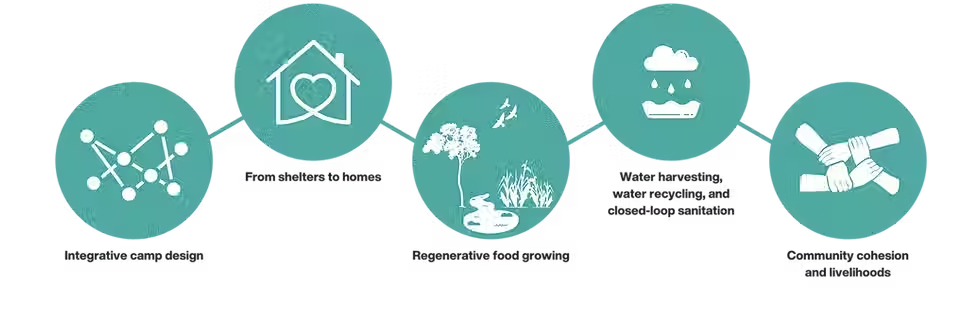
INGOs are exploring new and innovative ideas that involve bringing different sectors together in response. Partnerships with local universities and funding for research rather than emergency response can unlock new technologies that reuse the waste created by large groups of people in one space. Whether solid waste, food waste, or human waste, they are looking to recycle or compost these and to put their value back into the market or the soil. NGOs are experimenting with water retention and water capture, urine diversion toilets and grey water use, and have had some success in improving environmental conditions and supporting groups to grow food. But these approaches need investment to test and to spread, and people need to be encouraged to accept and to use them rather than waiting for more support from outside.
It is not difficult to see how a range of factors are colliding into a complex system in a state of crisis, with only a few pockets of hope. While there is no single easy solution, shifting one element in a system can eventually shift the whole. What won’t help is vainly working to keep the system functioning in the way it always has done, when it is already at breaking point.
Elements that desperately need shifting include:
Dependency, and the expectation that the solution comes from outside
Globally the political will is no longer there, and the damage created to human and environmental health by bringing in rather than developing within has become obvious. People need more control over their own solutions, and external support can plan for this, by designing emergency response in a way that rapidly begins to shift power and responsibility and involve those displaced in the response.
Working with environments rather than against them.
‘Don’t push the river’ is a phrase I have grown up with, look for the flow and go with it. This often applies literally as well as metaphorically. Supporting what people can do, looking at what people want to do, and moving with rather than against environmental conditions. Water retention landscapes are essential to raise the water table so that land can recover, food can grow and water can be pumped from wells.
Assessing and understanding the land and putting strategies in place before emergencies occur can offer alternatives to, for example, temporary concreted latrines in areas that flood and break or overflow in rains.
Building partnership with local structures and systems and working across sectors rather than only seeking expertise within them.
Partnerships with local universities, working with young and enthusiastic researchers like I have done here, or experienced and knowledgeable academics, who know their people and their context and are keen to experiment, can bring new technologies adapted to context, if they have the funds for research. Partnerships with local private sector organisations, who see the business potential of some of these technologies, can generate small livelihoods for the people who implement them, in selling food, collecting waste, making compost or saving seeds.
Planning for the unexpected and for the long term and investing in longer term solutions.
The unexpected is no longer unexpected, while we don’t know what will happen when, we do know things will be unstable for the foreseeable future, and emergencies develop rapidly into long-term and protracted crises. Building shelters from locally-sourced durable materials rather than using plastic tents that will break down and infiltrate the soil reduces the damage and waste from short-term fixes. Introducing reusable elements into rapid construction processes enables temporary shelters to be converted into longer-term structures over time and means an emergency response can evolve into a resilient settlement that benefits people and the environment.
Re-alliance does some of this work and is a tiny part of a growing movement that recognises the need for systems change. Like the Sphere guide to Nature Based Solutions in Humanitarian response, and growing numbers of visionary practitioners in communities, in some INGOs and in academia, they are together creating pockets of hope. Although we won’t find all the answers on our own, we feel at least we are assembling the right partners, having the right conversations and shifting some of these moving pieces in the right direction.

Join us, as members, funders, or advocates and become part of the conversation.