top of page
home
resources
Publications
case studies & articles
videos & webinars
podcasts
regeneration
get involved
upcoming events
join membership
donate
contact us
Dropdown
meet the team
projects
our members
about us
our services
donate
More
Use tab to navigate through the menu items.
Re-Alliance Cinema
Reproducir video
Reproducir video
03:35
Water Resilience Design at the Rubondo Regenerative Settlement, Uganda
The community involved in co-creating the Regenerative Settlement in Rubondo, Uganda, came together to create a Water resilience design. This included water for instant use (rainwater harvesting and slow sand filtration) and water retention landscapes (through rain gardens and swales). This project is supported by YICE Uganda, Arup, and Re-Alliance. Guilherme (Gui) Castagna from @fluxusecobr is an Engineer, Permaculture Teacher, and Hydrology Designer. He visited Nakivale Refugee Settlement in May 2026 to support with workshops alongside a community of refugees who are co-designing a Regenerative Settlement for 20 families. Naswirah Nalukwago is the Project Building Manager and also the founder of Bassattu Innovations. Winnie Tushabe is the co-founder of YICE Uganda, the project host organisation. Water resilience is important in any context, and especially in Ugandan refugee camps where water can be scarce and inaccessible. Alongside water for daily use like drinking and sanitation, the community are thinking about longer-term solutions by storing as much water in the soil, and restoring aquifers. Find out more about the Regenerative Settlements partnership here: https://www.re-alliance.org/projects/nakivale-settlement
Reproducir video
Reproducir video
07:14
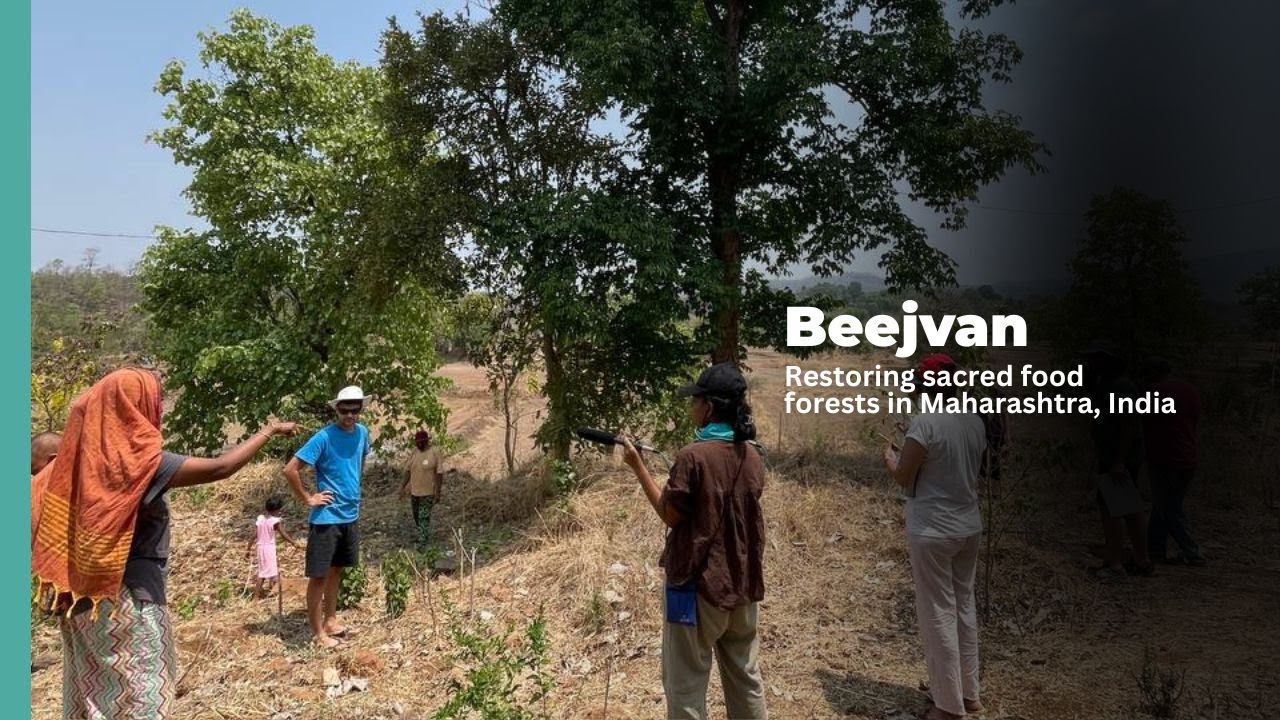
Beejvan | Restoring and regenerating sacred food forests in India
Beejvan began in 2022 to revive local understandings of tree-based farming. In this film, Founding Director Sanjana Krishnan explores the joys and the challenges of land-based work. The project has become more than a farming practice, but a healing and community-building activity. 🎥 Film by Pankaj Rishi Kumar
Reproducir video
Reproducir video
04:41
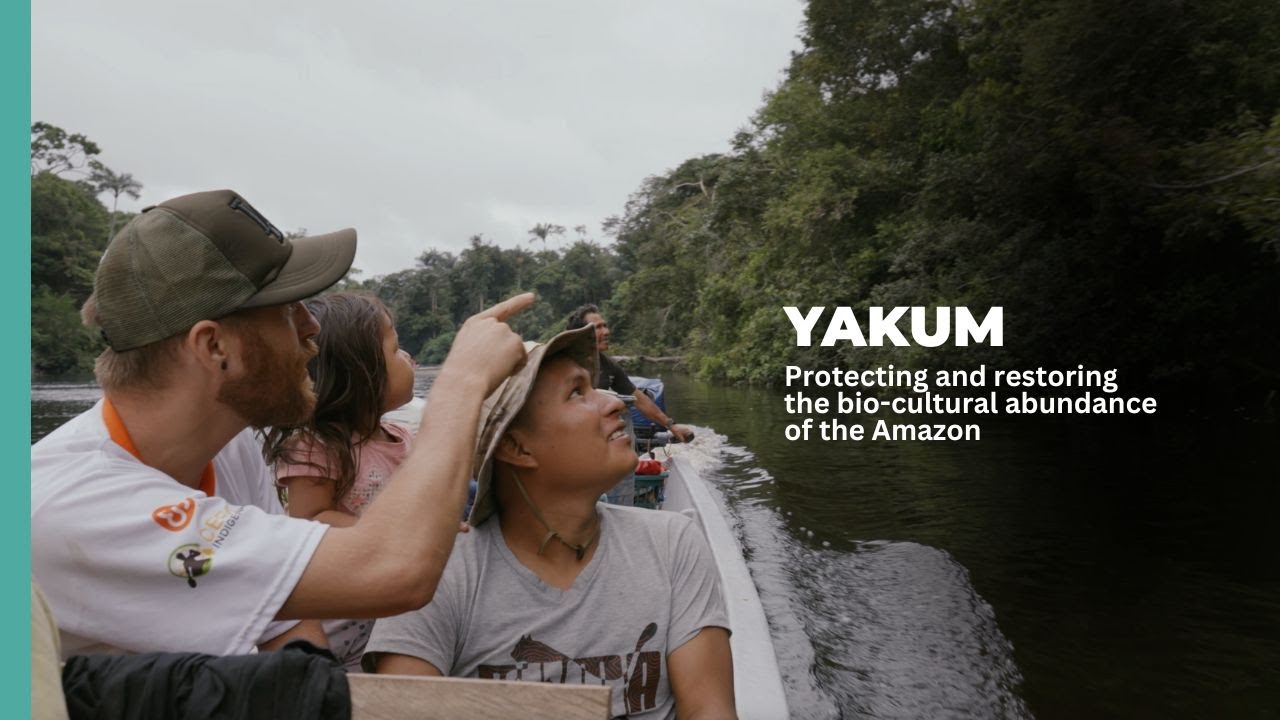
YAKUM | Protecting and restoring the bio-cultural abundance of the Amazon
YAKUM partners with three indigenous nations in Ecuador to turn degraded land into cultural food landscapes. In this film by Remi Bumstead, Re-Alliance member YAKUM explores the importance of Indigenous wisdom in forest protection and restoration, and the abundance that healthy forests can offer in terms of culture, food, and climate resilience. Arley Paraguaje and Nick Ovenden explain why YAKUM rediscover and replant diverse cultural foods, and safely harvest food from standing forests. Find out more about YAKUM's work at https://yakum.org/ 🎥 https://remibumstead.com/
Reproducir video
Reproducir video
07:21
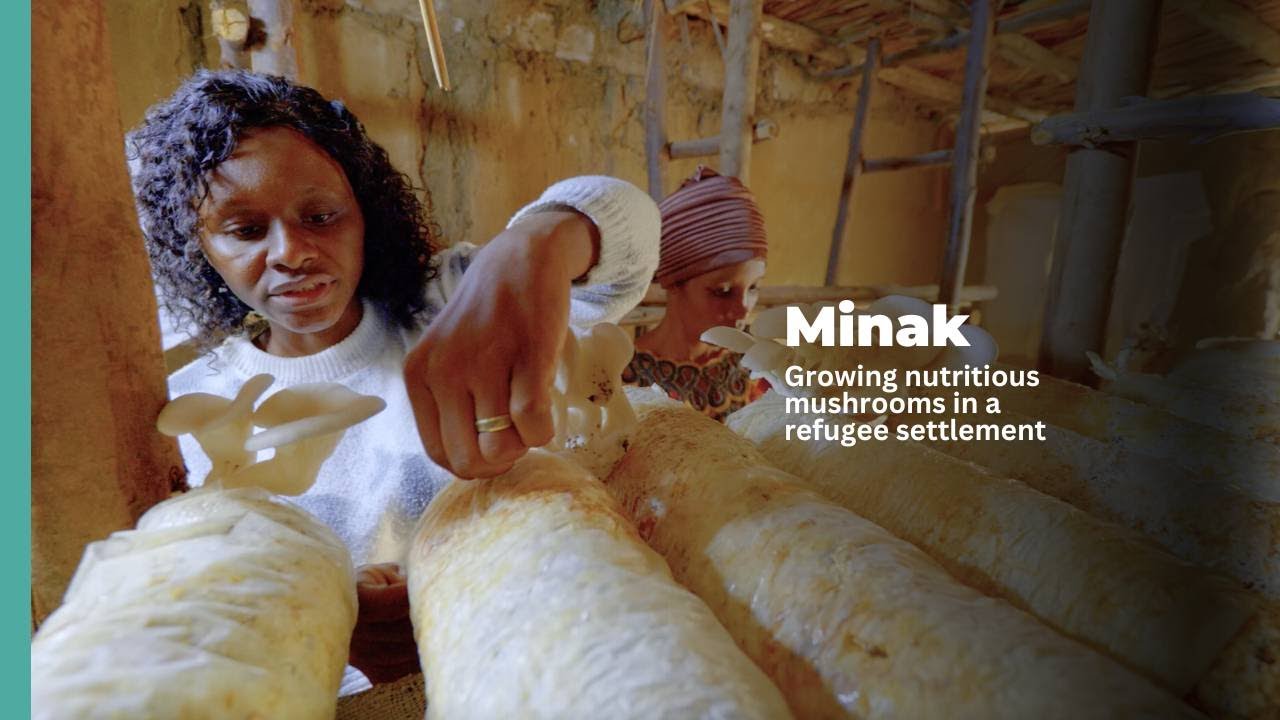
Minak | Growing nutritious mushrooms in a refugee settlement
Mariam Antoine from Minak Women-led Organisation helped co-create a programme of training women in Nakivale Refugee Settlement to grow nutritious Oyster mushrooms in reusable buckets. In this video, trainees from Minak organisation explain how mushroom cultivation is such a powerful way to grow the health and income of people living in refugee settlements. Re-Alliance worked with Minak to create a how-to booklet for growing mushrooms. Read more about the project here and download the booklet: https://www.re-alliance.org/post/cultivating-mushrooms-in-buckets Minak is bringing to life real examples of #Permaculture in #Refugee settlements.
Reproducir video
Reproducir video
06:08
YICE Uganda | Urine Diversion Dry Toilets (UDDT) - a type of Compost Toilet
Join Winnie Tushabe, co-founder of YICE Uganda, and Ecosan user Uwizeye Salima, in exploring Urine Diversion Dry Toilets (UDDT) a type of Ecological Sanitation (EcoSan) Composting toilet. In the Nakivale refugee camp in Uganda, refugees are given a small plot of land to build a dwelling and farm food on. Re-Alliance's partner organisation YICE Uganda (Youth Initiative for Community Empowerment) is working with families to create kitchen gardens but yields are limited because the soil is poor. Re-Alliance and YICE collaborated to build eight urine diverting dry toilets (or ‘Ecosan’ toilets) for families. By separating the urine and faeces, the volume of composting waste is reduced, extending the capacity of the compost chamber and giving an immediate source of fertiliser in the form of urine, which, when diluted 1:10 - 1:20 with water, is an excellent fertiliser rich in nitrogen, potassium and phosphorus. Diverting the urine away stops the compost chamber from becoming anaerobic and smelly and the addition of wood ash or saw dust, after using the toilet, acts as a dehydrating cover material. This design used recycled plastic barrels as containers for the faeces, which ensures no ground pollution. Once nearly full, the barrel is moved aside and replaced with a fresh barrel. With the hot composting achieved inside the barrels, compost can be created in under 12 months in the Ugandan climate. The compost is used to enrich the soil around fruiting trees and bushes. Find out more about this design and create your own with our free guides on www.re-alliance.org/publications .
Reproducir video
Reproducir video
07:35
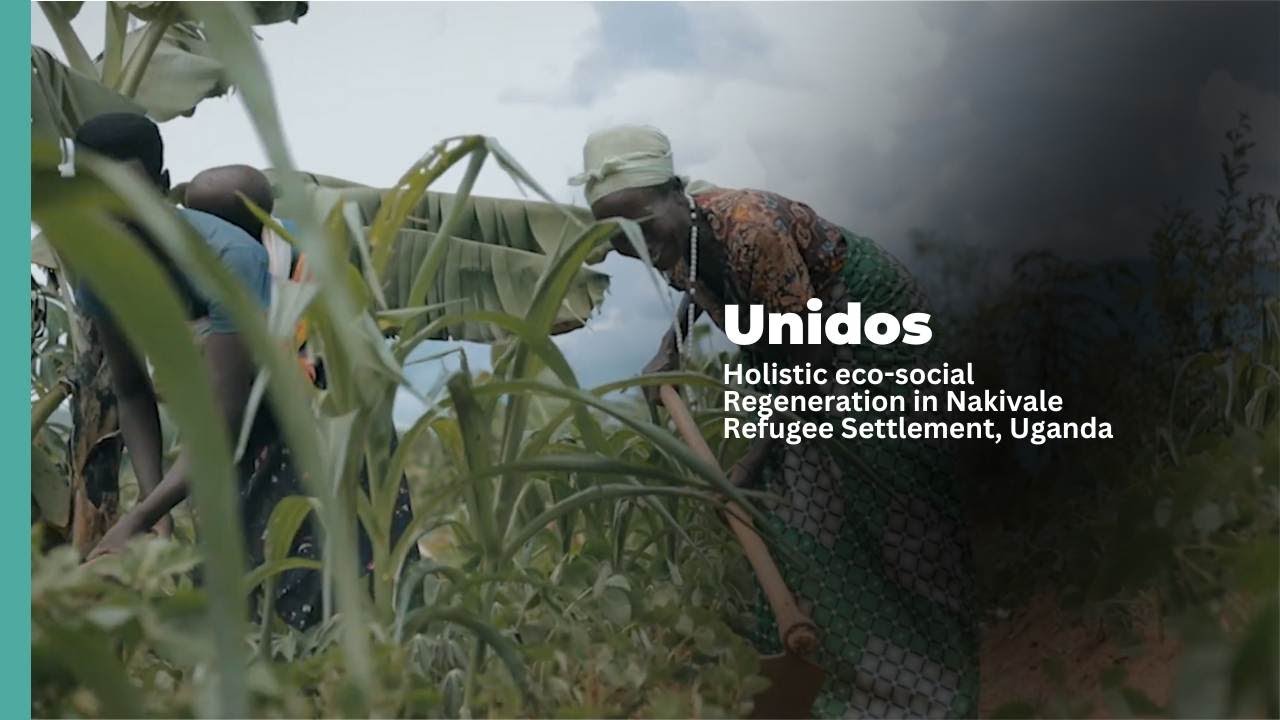
Unidos Social Innovation Centre | Eco-social regeneration in Nakivale Refugee Settlement
What could it look like if Refugee Settlements were thriving ecological and social spaces? Unidos Social Innovation Centre is a refugee-led, community-based organisation that engages with young people located in the Nakivale Refugee settlement, South West Uganda. In this video, Unidos founder Paulinho Muzaliwa explains how they support the communities to create abundant Permaculture gardens, grow biodiverse food forests, and build healthy soils. Find out more about Unidos at https://unidosprojects.org/ Donate to Unidos' work here: https://www.gofundme.com/f/water-4-thriving-african-permaculture-group 🎥 7Times Film Production
Reproducir video
Reproducir video
04:36
Ecopoblaciones | Ecopoblaciones Ecuador
Ecopoblaciones Ecuador create eco-social regeneration programs that promote the participatory design and implementation of sustainable and resilient populations. Their work integrates ecology, social, economic and cultural aspects, using tools and processes of eco-neighborhoods, eco-social movements, permaculture, ecotourism, bio-construction, participatory leadership, emotional management, well-being, among others. Find out more about Ecopoblaciones Ecuador here: https://ecopoblaciones.github.io/ Find out more about joining Re-Alliance's thriving community of members here: https://www.re-alliance.org/members
Reproducir video
Reproducir video
11:32
Green Releaf | Designing for resilience in disaster and conflict prone regions in the Philippines
Green Releaf Initiative prototyped two projects that aimed to respond to and prevent disasters, in contexts of climate and conflict vulnerability in the Philippines. Green Releaf worked with Permaculture as an approach to address food security, regenerative livelihood, and ecosystem restoration. They had a community-led approach, working with early adapters as grassroots permaculture leaders to train as multipliers. They aimed to highlight the traditional ecological knowledge (TEK) from the community, honouring their earth wisdom as key to the community's resilience. Featuring grassroots community leaders from areas affected by disasters and displacement where Green Releaf worked, this film begins to document the knowledge learned and practices implemented over time.
Reproducir video
Reproducir video
02:32
What is Re-Alliance?
What is Re-Alliance? What do we hope to achieve? These questions and more are explored by some of of the founding members of the Re-Alliance network.
Cargar más
bottom of page